
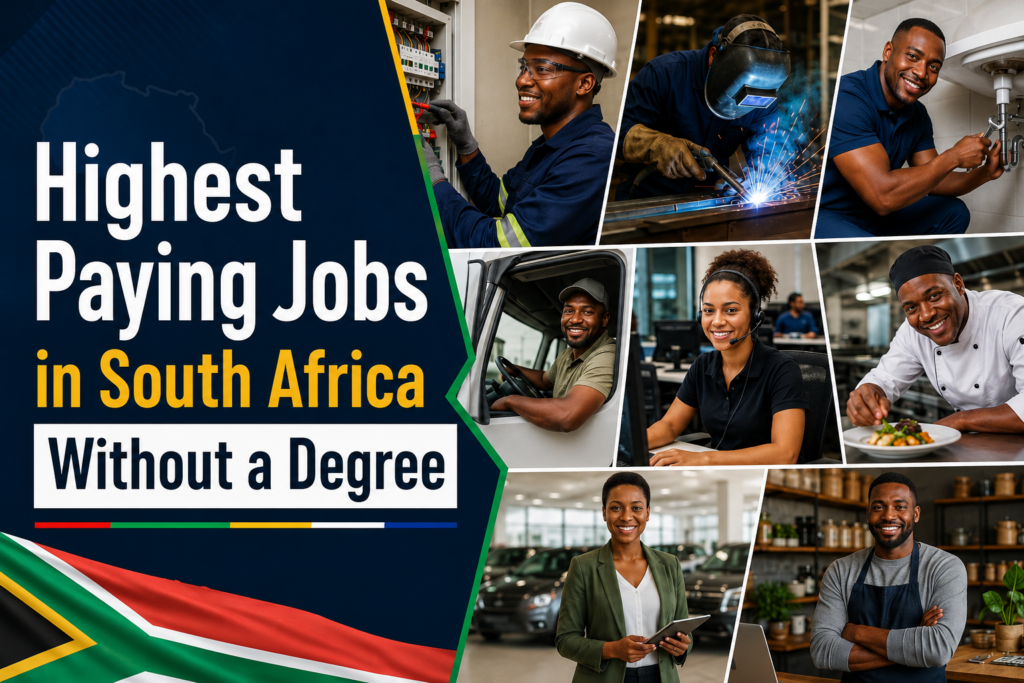
Many people believe that you need a university degree to earn a high salary, but that’s no longer true. Across South Africa, thousands of professionals earn excellent incomes through practical skills, vocational training, apprenticeships, certifications, sales performance, or by running their own businesses.

Industries such as construction, mining, information technology, transport, engineering, sales, and entrepreneurship continue to offer high-paying career opportunities to people without traditional university qualifications.
In many cases, employers value experience, technical ability, reliability, and industry certifications more than academic degrees.
Whether you’re a recent Matric graduate, planning a career change, or looking for better earning opportunities, there are many career paths that can provide financial stability without attending university.
This guide explores some of the highest-paying jobs in South Africa that don’t require a university degree, the qualifications needed, expected salaries, and how to get started.
What You Will Learn
In this guide, you’ll discover:
- Whether you can earn a high income without a university degree.
- The highest-paying skilled trade careers.
- High-paying IT careers without a degree.
- Transport and logistics careers with strong earning potential.
- Sales careers where commission increases your income.
- Entrepreneurial careers that offer unlimited earning potential.
- Skills that employers value most.
- Tips for increasing your salary over time.
By the end of this guide, you’ll have a better understanding of which careers offer the best financial opportunities and how you can begin building a successful future without following the traditional university route.
Can You Earn a High Salary Without a Degree in South Africa?
Yes, it is possible to earn a strong income in South Africa without holding a university degree.
However, high-paying jobs without degrees usually require something else in place of university education. This may include technical training, professional certification, an apprenticeship, a trade test, practical experience, a strong sales record, or specialised skills.
Employers are often willing to pay more when a worker can solve difficult problems, perform safely, produce quality results, or help a company increase revenue.
For example, a skilled artisan may earn more than an office worker with a degree because the artisan has practical expertise that is difficult to replace. In the same way, a successful sales consultant may earn a high income through commission, while an experienced IT specialist may be hired based on certifications and a strong portfolio rather than formal university qualifications.
What Makes a Job High-Paying?
Several factors influence how much a person can earn.
Scarcity of Skills
Jobs that require rare or specialised skills usually pay more.
Examples include:
- Coded welding
- Industrial electrical work
- Diesel mechanics
- Cybersecurity
- Heavy vehicle operation
- Technical sales
When employers struggle to find qualified workers, salaries often increase.
Level of Responsibility
Workers who manage expensive equipment, supervise teams, protect company systems, or work in dangerous environments may earn higher salaries because of the responsibility involved.
Industry
Some industries pay more than others because of the value and risk involved.
High-paying industries may include:
- Mining
- Construction
- Engineering
- Manufacturing
- Information technology
- Transport
- Energy
- Financial services
Experience
Experience can make a major difference to earning potential.
A beginner may earn an entry-level salary, while someone with five to ten years of experience, strong references, and advanced certifications may earn significantly more.
Location
Salaries may vary depending on where you work.
Large cities, industrial areas, mining regions, ports, and major construction projects may offer better-paying opportunities than smaller towns.
Overtime and Allowances
Some workers increase their earnings through:
- Overtime
- Night-shift allowances
- Travel allowances
- Danger pay
- Standby pay
- Performance bonuses
- Sales commission
This means the total monthly income may be much higher than the basic salary.
A Degree Is Not the Only Valuable Qualification
Although university degrees remain important for many professions, they are not the only qualifications employers respect.
Other valuable qualifications include:
- Trade certificates
- TVET college qualifications
- Apprenticeships
- Learnerships
- Industry certifications
- Driver’s licences
- Safety training
- Professional licences
- Online technical certifications
- Practical portfolios
The most important thing is to choose training that is recognised by employers and connected to real job opportunities.
High Income Usually Requires Patience
It is important to be realistic.
Most people do not start earning a high salary immediately. They begin in junior roles, build experience, improve their qualifications, and gradually move into better-paying positions.
For example:
- A welding assistant may become a qualified welder.
- Junior mechanic may become a diesel technician.
- A help desk agent may become a network administrator.
- A sales consultant may become a sales manager.
- Delivery driver may become a logistics supervisor.
- A general worker may become a site supervisor.
Your earning potential increases when your skills, responsibilities, and reputation improve.
1. Electrician
Electricians are among the highest-paid artisans in South Africa. They install, repair, maintain, and inspect electrical systems in homes, factories, mines, power stations, shopping centres, and commercial buildings.
As South Africa continues to invest in infrastructure, renewable energy, and industrial development, qualified electricians remain in high demand.
Typical Duties
- Installing electrical wiring
- Repairing faults
- Reading electrical drawings
- Testing electrical systems
- Maintaining industrial equipment
- Ensuring compliance with safety regulations
Typical Requirements
- Matric (often preferred)
- Electrical apprenticeship
- Trade Test (Qualified Electrician)
- Wireman’s Licence (for certain work)
Estimated Salary
- Apprentice: R8,000–R15,000 per month
- Qualified Electrician: R22,000–R45,000 per month
- Industrial or Mining Electrician: R45,000–R80,000+ per month
Experienced electricians working overtime or on major industrial projects can earn well above these figures.
2. Boilermaker
Boilermakers fabricate, assemble, repair, and maintain heavy steel structures and pressure vessels used in mining, construction, manufacturing, and power generation.
This career combines technical knowledge with advanced welding and fabrication skills.
Typical Duties
- Reading engineering drawings
- Fabricating steel structures
- Installing industrial equipment
- Repairing heavy machinery
- Performing maintenance shutdowns
Typical Requirements
- Apprenticeship
- Trade Test
- Welding experience
- Safety certifications
Estimated Salary
- Entry Level: R18,000–R30,000 per month
- Experienced: R35,000–R65,000+ per month
- Mining Shutdown Projects: R70,000+ per month (depending on overtime and contracts)
3. Welder (Specialised Welding)
Not all welders earn the same salary.
Highly skilled welders with specialist certifications often earn significantly more than general welders.
The highest-paying welding specialisations include:
- Coded Welding
- Pipe Welding
- TIG Welding
- Pressure Vessel Welding
- Underwater Welding (internationally)
- Structural Steel Welding
Typical Duties
- Fabricating steel structures
- Pipe welding
- Reading technical drawings
- Repairing heavy equipment
- Working on construction and mining projects
Typical Requirements
- Welding qualification
- Trade Test (recommended)
- Coded welding certifications (for higher-paying roles)
- Practical experience
Estimated Salary
- General Welder: R15,000–R28,000 per month
- Coded Welder: R30,000–R60,000+ per month
- Shutdown Projects: R70,000+ per month
Experienced coded welders are regularly recruited for mining, petrochemical, and power generation projects.
4. Diesel Mechanic
Diesel mechanics maintain trucks, buses, mining vehicles, agricultural equipment, and heavy machinery.
Because transport and mining rely heavily on diesel-powered equipment, qualified diesel mechanics remain among the highest-paid artisans.
Typical Duties
- Diagnosing mechanical faults
- Engine rebuilding
- Brake repairs
- Hydraulic systems maintenance
- Electrical diagnostics
- Preventative maintenance
Typical Requirements
- Apprenticeship
- Trade Test
- Mechanical experience
Estimated Salary
- Entry Level: R20,000–R30,000 per month
- Experienced: R35,000–R60,000+ per month
- Mining Industry: R70,000+ per month
5. Crane Operator
Large construction projects, ports, mines, and manufacturing plants require qualified crane operators.
Operating heavy lifting equipment safely requires specialised training and certification.
Typical Duties
- Operating mobile cranes
- Tower crane operation
- Heavy lifting
- Equipment inspections
- Load calculations
- Following safety procedures
Typical Requirements
- Crane operator licence
- Medical fitness
- Safety training
- Practical operating experience
Estimated Salary
- Entry Level: R18,000–R30,000 per month
- Experienced Operators: R35,000–R55,000+ per month
Specialised operators on large industrial projects may earn considerably more.
Why Skilled Trades Pay So Well
Skilled trades remain some of the highest-paying careers without a university degree because they require specialised practical expertise that cannot easily be replaced.
Benefits include:
- High demand across South Africa
- Excellent overtime opportunities
- International employment options
- Opportunities to become self-employed
- Continuous demand in mining, manufacturing, construction, and energy sectors
- Strong long-term earning potential
For people who enjoy practical work, problem-solving, and hands-on careers, becoming a qualified artisan can provide an excellent income and long-term job security.
6. Software Developer
Software development is one of the highest-paying careers that does not always require a university degree. Today, many employers hire developers based on their coding skills, portfolio, certifications, and practical experience rather than formal qualifications.
If you can build websites, mobile apps, or business software, you can earn an excellent income.
Typical Duties
- Writing and testing code
- Building websites and applications
- Fixing software bugs
- Working with databases
- Collaborating with designers and clients
- Maintaining existing software
Popular Programming Languages
- Python
- JavaScript
- Java
- C#
- PHP
- SQL
Typical Requirements
- Strong programming skills
- Portfolio of completed projects
- GitHub profile (highly recommended)
- Online certifications (optional but beneficial)
Estimated Salary
- Junior Developer: R20,000–R35,000 per month
- Mid-Level Developer: R40,000–R70,000 per month
- Senior Developer: R80,000–R120,000+ per month
Freelance developers who work with international clients can often earn even more.
7. Cybersecurity Specialist
As cybercrime continues to increase, businesses are investing heavily in protecting their systems and customer data.
Many cybersecurity professionals enter the industry through certifications and practical experience instead of traditional university degrees.
Typical Duties
- Monitoring computer networks
- Identifying security threats
- Conducting vulnerability assessments
- Responding to cyber incidents
- Protecting company systems
- Implementing security policies
Typical Requirements
- Cybersecurity certifications
- Networking knowledge
- Linux and Windows administration
- Practical experience in IT
Popular certifications include:
- CompTIA Security+
- Certified Ethical Hacker (CEH)
- Google Cybersecurity Certificate
- Cisco CyberOps
Estimated Salary
- Entry Level: R25,000–R40,000 per month
- Experienced: R50,000–R90,000+ per month
- Senior Security Consultant: R100,000+ per month
8. Commercial Truck Driver
South Africa’s logistics industry depends on skilled truck drivers to transport goods across the country and neighbouring countries.
Drivers with professional licences and experience can earn very competitive salaries.
Typical Duties
- Long-distance driving
- Vehicle inspections
- Cargo safety
- Route planning
- Delivery documentation
- Basic vehicle maintenance
Typical Requirements
- Code EC driver’s licence
- Professional Driving Permit (PrDP)
- Safe driving record
- Logistics experience (advantage)
Estimated Salary
- Local Driver: R15,000–R25,000 per month
- Long-Distance Driver: R25,000–R45,000 per month
- Cross-Border Driver: R35,000–R60,000+ per month
Many employers also provide travel allowances and overtime pay.
9. Sales Consultant (Commission-Based)
Sales professionals have some of the highest earning potential without a degree because income is often linked to performance.
Industries that pay high commissions include:
- Vehicle sales
- Property
- Insurance
- Telecommunications
- Financial services
- Luxury retail
Typical Duties
- Finding new clients
- Selling products and services
- Negotiating contracts
- Building customer relationships
- Meeting sales targets
Typical Requirements
- Excellent communication skills
- Confidence
- Customer service experience
- Sales experience (helpful)
Estimated Salary
- Basic Salary: R10,000–R20,000 per month
- With Commission: R30,000–R80,000+ per month
Top-performing salespeople can earn six-figure annual bonuses or more depending on the industry.
10. Entrepreneur
Entrepreneurs have the highest earning potential of all because there is no fixed salary limit.
Many successful South African business owners never attended university but built profitable companies through hard work, skill, and determination.
Examples include businesses in:
- Welding and fabrication
- Plumbing
- Electrical services
- Construction
- Digital marketing
- Software development
- E-commerce
- Logistics
- Property maintenance
- Cleaning services
Income Potential
Unlike traditional employment, business income depends on:
- Number of clients
- Pricing
- Business growth
- Reputation
- Marketing
- Quality of service
Estimated Earnings
- Small Business Owner: R20,000–R50,000 per month
- Established Business: R50,000–R200,000+ per month
- Highly Successful Businesses: Unlimited earning potential
Building a successful business requires patience and persistence, but it can provide financial freedom and the opportunity to create jobs for others.
Why These Careers Offer High Salaries
These professions consistently rank among the highest-paying jobs without a university degree because they combine specialised skills with strong market demand.
Common reasons for their high earning potential include:
- Skills shortages in key industries.
- High levels of responsibility.
- Technical expertise that is difficult to replace.
- Opportunities for overtime, bonuses, and commission.
- Strong demand across mining, construction, logistics, IT, and sales.
- The ability to work independently or start your own business.
By investing in practical training, gaining experience, and continually improving your skills, you can build a rewarding and well-paid career without following the traditional university path.
How to Increase Your Earning Potential Without a Degree
Getting a high-paying job is only the beginning. The people who earn the highest salaries usually continue improving their skills throughout their careers.
Whether you work in construction, IT, logistics, sales, or healthcare, investing in yourself can significantly increase your income over time.
Continue Learning
Learning should never stop after getting your first job.
There are many affordable and even free ways to improve your skills, including:
- Online courses
- Industry certifications
- TVET college programmes
- Learnerships
- Apprenticeships
- Workplace training
- Professional workshops
The more valuable your skills become, the more attractive you are to employers.
Gain Practical Experience
Experience is one of the biggest factors that influence salary.
Employers often prefer someone who has successfully completed real projects over someone who only has theoretical knowledge.
You can gain experience by:
- Taking entry-level jobs
- Volunteering
- Freelancing
- Completing apprenticeships
- Working on personal projects
- Assisting experienced professionals
Every project you complete builds your confidence and your CV.
Earn Industry Certifications
Professional certifications can help you qualify for promotions and higher-paying positions.
Examples include:
Skilled Trades
- Trade Test
- Wireman’s Licence
- Welding Codes
- Working at Heights
- First Aid
- Health and Safety
Information Technology
- CompTIA A+
- Network+
- Security+
- Cisco CCNA
- Microsoft Certifications
- AWS Cloud Practitioner
- Google IT Support Certificate
Transport
- Professional Driving Permit (PrDP)
- Dangerous Goods Certification
- Crane Operator Licence
- Forklift Licence
These qualifications demonstrate that your skills meet recognised industry standards.
Improve Your Soft Skills
Technical skills may help you get hired, but soft skills often determine how quickly you are promoted.
Important soft skills include:
- Communication
- Teamwork
- Leadership
- Time management
- Problem-solving
- Customer service
- Adaptability
- Professionalism
Employees who work well with others and consistently deliver quality results are often trusted with more responsibility—and higher salaries.
Build a Professional Network
Networking can open doors to better job opportunities.
Consider:
- Joining industry associations
- Attending career fairs
- Connecting with professionals on LinkedIn
- Participating in workshops and conferences
- Asking mentors for guidance
Many job opportunities are filled through referrals before they are publicly advertised.
Be Open to Relocating
Some of the highest-paying opportunities are found in areas where skilled workers are in short supply.
You may find better-paying jobs in:
- Mining regions
- Industrial zones
- Large cities
- Major ports
- Renewable energy projects
- Infrastructure developments
Being willing to relocate can significantly improve your earning potential.
Consider Starting Your Own Business
Many skilled professionals eventually become self-employed.
Examples include:
- Electricians starting electrical companies
- Welders opening fabrication workshops
- Mechanics operating repair garages
- Web developers launching digital agencies
- Truck drivers building transport businesses
Owning a successful business can provide far greater earning potential than traditional employment, although it also comes with greater responsibility and risk.
Image Prompt:
A realistic South African professional attending technical training while earning certifications, networking at a career event, improving practical skills in a workshop, and planning a small business on a laptop, modern learning and business environment, diverse South African professionals, natural lighting, ambitious and inspiring atmosphere, Google AdSense friendly, ultra-realistic photography style.
Final Thoughts
A university degree is not the only route to financial success in South Africa. Many of the country’s highest-paying careers are built on practical skills, technical expertise, certifications, and years of hands-on experience.
Whether you choose to become an electrician, boilermaker, coded welder, software developer, cybersecurity specialist, commercial truck driver, sales consultant, or entrepreneur, your earning potential will grow as you develop your skills and build your reputation.
Remember these key takeaways:
- Focus on careers that are in high demand.
- Invest in recognised training and certifications.
- Gain practical experience as early as possible.
- Continuously improve your skills.
- Build a strong professional network.
- Consider entrepreneurship once you have enough experience.
Success is rarely determined by a single qualification. It is built through continuous learning, dedication, and a willingness to seize opportunities.
With the right mindset and commitment, you can build a rewarding and high-paying career—even without a university degree.
Frequently Asked Questions (FAQs)
What is the highest-paying job in South Africa without a degree?
Entrepreneurship offers the highest earning potential because there is no salary cap. Among employed positions, experienced electricians, coded welders, boilermakers, software developers, cybersecurity specialists, diesel mechanics, and commission-based sales consultants are some of the best-paid careers.
Can I earn more than someone with a university degree?
Yes. Many skilled artisans, IT professionals, entrepreneurs, and top-performing salespeople earn more than graduates in certain industries. Your income often depends on your skills, experience, and performance rather than your qualifications alone.
Which industries pay the highest salaries without a degree?
Some of the best-paying industries include:
- Mining
- Construction
- Manufacturing
- Information Technology
- Transport and Logistics
- Engineering Services
- Renewable Energy
- Sales and Financial Services
Is Matric required for these jobs?
Many employers prefer candidates with a Matric certificate, but some apprenticeships, vocational programmes, and entry-level positions accept applicants with lower qualifications, provided they have the necessary practical skills or training.
Can I study while working?
Absolutely. Many professionals complete online courses, apprenticeships, short courses, and industry certifications while working full-time. Continuous learning is one of the fastest ways to increase your earning potential.
Also read: Best Free Online Courses for Job Seekers in South Africa