

Not everyone wants to spend their day sitting behind a desk.
For many South Africans, the most satisfying work comes from building, repairing, creating, installing, operating, or maintaining something tangible. If you enjoy staying active, solving practical problems, working with tools, or seeing the results of your efforts at the end of the day, a hands-on career may be the perfect fit. In this article we will explore the best careers for people who like working with their hands.
These careers are essential to South Africa’s economy. Skilled tradespeople, technicians, artisans, mechanics, construction workers, agricultural specialists, and manufacturing professionals help keep businesses, industries, infrastructure, and communities running every day. Without them, homes would not be built, vehicles would not be repaired, electricity would not reach households, and factories could not operate efficiently.
A demand for practical skills.
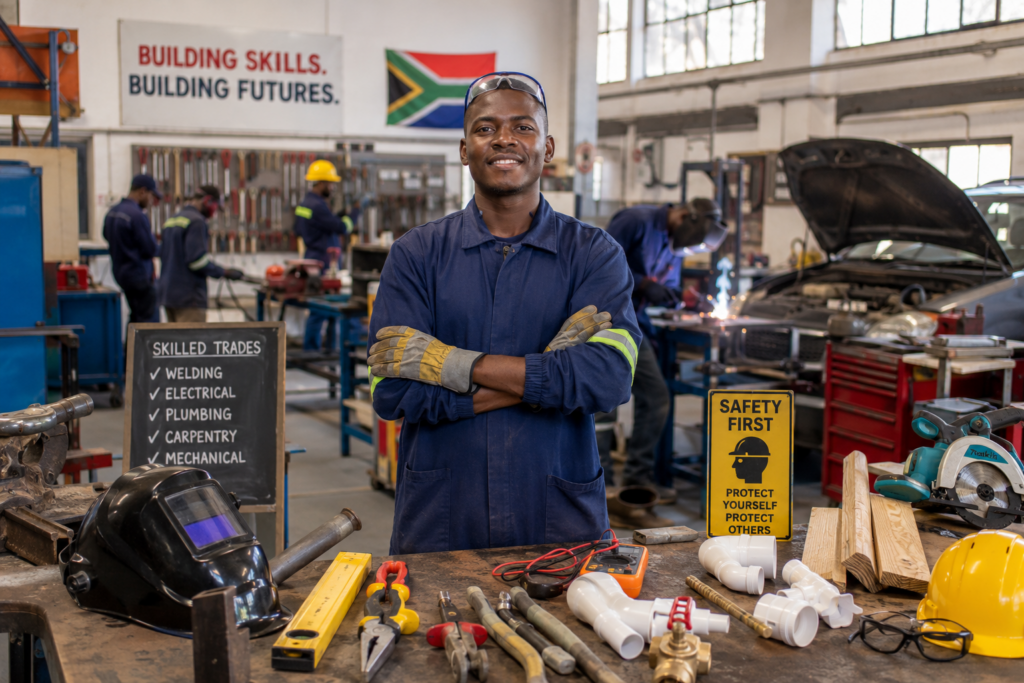
The demand for practical skills also remains strong. While technology continues to change the workplace, many hands-on occupations cannot easily be replaced by automation because they require technical knowledge, precision, problem-solving, and physical skill. As South Africa continues investing in infrastructure, renewable energy, manufacturing, logistics, mining, agriculture, and construction, qualified artisans and technical workers are expected to remain valuable.
Another advantage of hands-on careers is the variety of pathways available. Some occupations require apprenticeships or learnerships, while others begin through TVET colleges, vocational training, internships, or on-the-job experience. Many skilled workers also go on to start successful businesses, giving them greater independence and higher earning potential.
Whether you are finishing school, considering a career change, or simply looking for a profession that matches your personality, choosing a career that fits your natural strengths can lead to greater job satisfaction and long-term success.
In this guide, we’ll explore some of the best careers for people who enjoy practical work, explain the skills required for each, discuss salary expectations and growth opportunities, and help you choose a career that suits both your interests and the South African job market.
What You’ll Learn in This Guide
In this article, we’ll cover:
- Why hands-on careers are in high demand
- The advantages of practical and skilled careers
- The best careers for people who enjoy physical work
- Skilled trades with excellent earning potential
- Careers that require apprenticeships or learnerships
- Industries with strong job opportunities in South Africa
- How to choose the right hands-on career
- Frequently asked questions
- Practical career advice for getting started
By the end of this guide, you’ll have a better understanding of which practical careers may suit your interests, strengths, and long-term goals.
Why Hands-On Careers Are a Great Choice
For many years, people believed that the only path to a successful career was through a university degree and an office job. While higher education is valuable, it is not the only route to a rewarding and well-paying career.
South Africa continues to experience a shortage of skilled artisans, technicians, and tradespeople. Industries such as construction, mining, manufacturing, agriculture, automotive, renewable energy, and logistics depend on people who can solve practical problems and work confidently with tools, machinery, and equipment.
If you enjoy fixing things, building structures, repairing vehicles, installing systems, or creating products with your own hands, you already possess qualities that many employers value.
Hands-on careers are often ideal for people who:
- Enjoy practical problem-solving.
- Prefer physical activity over sitting at a desk.
- Like seeing the results of their work.
- Enjoy learning through experience.
- Work well with tools and equipment.
- Prefer variety instead of repetitive office tasks.
Instead of spending every day in front of a computer, these careers allow you to work on real projects where your skills make an immediate difference.
Strong Demand Across South Africa
Many skilled trades remain in high demand because they are essential to everyday life.
Homes need electricity.
Businesses need machinery repaired.
Roads and buildings require maintenance.
Factories depend on technicians to keep production running.
Vehicles need servicing.
Plumbing systems require installation and repairs.
These jobs cannot simply be outsourced or replaced by software.
As South Africa continues investing in housing, infrastructure, renewable energy, manufacturing, and industrial development, skilled workers will continue playing an important role in economic growth.
Hands-On Careers Can Offer Excellent Salaries
Many people mistakenly assume that trade careers pay poorly.
In reality, experienced artisans and technicians often earn competitive salaries, especially when they specialise in high-demand skills.
For example, experienced professionals in fields such as:
- Welding
- Electrical work
- Plumbing
- Diesel mechanics
- Boilermaking
- Instrumentation
- Millwright work
- Refrigeration and air conditioning
can earn attractive salaries depending on their qualifications, employer, industry, overtime opportunities, and experience.
Many skilled workers also earn additional income through weekend jobs, freelance work, or operating their own businesses.
Opportunities to Become Self-Employed
One of the biggest advantages of learning a skilled trade is the opportunity to work for yourself.
After gaining experience, many artisans eventually start businesses offering services directly to clients.
Examples include:
- Electrical contracting
- Plumbing services
- Welding and fabrication
- Mobile mechanic services
- Carpentry and furniture making
- Air conditioning installation
- Appliance repairs
- Home renovations
Instead of relying on one employer, you can build your own customer base and increase your earning potential over time.
Many successful South African entrepreneurs started as qualified artisans before opening their own companies.
Learn While You Earn
Unlike some careers that require several years of full-time university study before entering the workplace, many skilled trades offer opportunities to learn while earning an income.
This may happen through:
- Apprenticeships
- Learnerships
- TVET college practical training
- Workplace internships
- On-the-job training
These pathways allow students to develop practical experience while building recognised qualifications.
For many young South Africans, this makes hands-on careers more financially accessible.
Practical Skills Are Transferable
Another benefit of skilled trades is that practical abilities can often be used across different industries.
For example:
An electrician may work in:
- Construction
- Mining
- Manufacturing
- Renewable energy
- Property maintenance
- Industrial plants
A welder may work in:
- Engineering
- Shipbuilding
- Automotive manufacturing
- Mining
- Construction
- Petrochemical plants
A mechanic may work on:
- Passenger vehicles
- Trucks
- Heavy machinery
- Agricultural equipment
- Mining equipment
This flexibility creates more employment opportunities throughout your career.
Job Satisfaction Through Tangible Results
Many people who work with their hands enjoy seeing the direct results of their efforts.
At the end of the day, they can point to something they repaired, installed, built, assembled, or improved.
Whether it is a completed house, a repaired engine, a newly installed electrical system, or a welded steel structure, the work produces visible results.
This sense of achievement is one reason many skilled tradespeople report high levels of job satisfaction.
Hands-On Careers Require More Than Physical Strength
Some people think practical careers only involve physical labour.
In reality, modern trades also require:
- Technical knowledge
- Safety awareness
- Mathematics
- Reading technical drawings
- Problem-solving
- Communication
- Planning
- Precision
- Continuous learning
As technology advances, many trades now involve digital equipment, automated systems, computer diagnostics, and specialised software.
This means skilled workers continue developing throughout their careers.
A Career That Matches Your Personality
The best career is one that fits both your abilities and your interests.
If you enjoy solving practical problems, learning by doing, working outdoors or in workshops, and creating things with your own hands, a skilled trade may provide greater satisfaction than a traditional office job.
Rather than choosing a career based only on what other people expect, consider the type of work that motivates you every day.
When your work matches your personality, building a long-term career becomes much more enjoyable.
Best Skilled Trade Careers for People Who Like Working With Their Hands
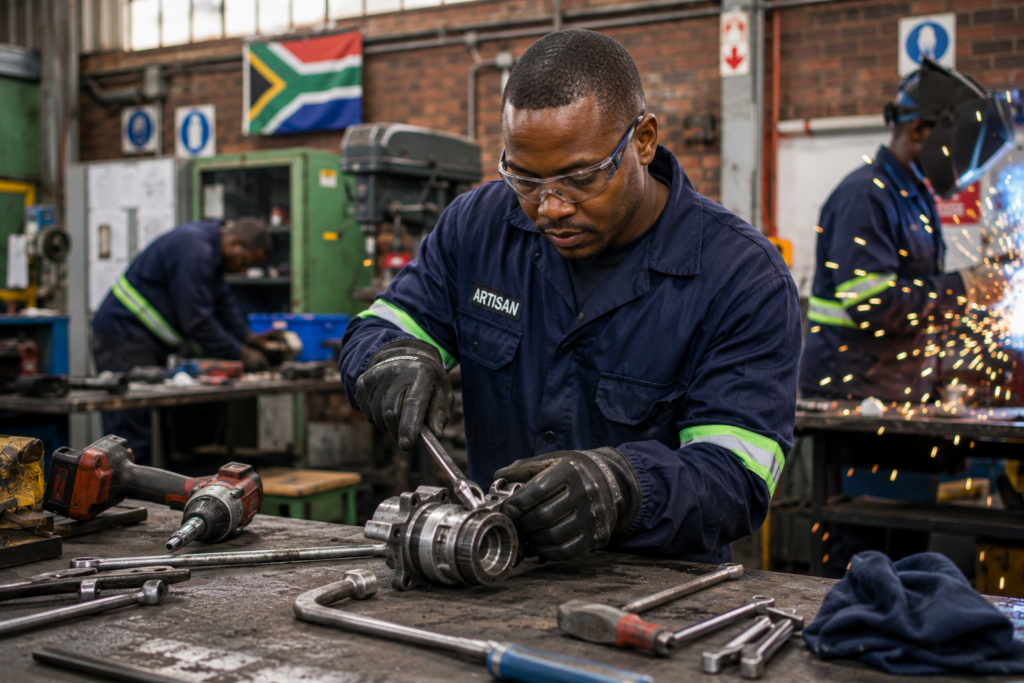
If you enjoy practical work, there are many career options that allow you to build, repair, install, maintain, or create something every day.
Some of these careers require apprenticeships, while others begin through TVET colleges, learnerships, or workplace training. Many also offer excellent opportunities for career growth and self-employment.
Below are some of the best hands-on careers available in South Africa.
Electrician
Electricians install, maintain, repair, and test electrical systems in homes, businesses, factories, mines, and industrial facilities.
Daily responsibilities may include:
- Installing electrical wiring
- Repairing faults
- Testing electrical equipment
- Reading electrical diagrams
- Installing lighting systems
- Maintaining electrical panels
- Following safety regulations
Electricians are needed in construction, mining, manufacturing, renewable energy, municipalities, and maintenance companies.
With experience, many qualified electricians become electrical contractors and run their own businesses.
Plumber
Plumbers install and repair water supply systems, drainage systems, toilets, geysers, pipes, and sanitation infrastructure.
Their work involves:
- Installing piping
- Repairing leaks
- Unblocking drains
- Reading plumbing plans
- Installing water heating systems
- Maintaining plumbing equipment
Plumbing remains one of the most reliable trades because homes, schools, hospitals, offices, and factories all require plumbing services.
Experienced plumbers often earn additional income through private work after hours.
Welder
Welding is an excellent career for people who enjoy precision, metalwork, and fabrication.
Welders join metal components using different welding processes depending on the material and industry.
Common welding methods include:
- Shielded Metal Arc Welding (SMAW)
- Gas Metal Arc Welding (MIG)
- Gas Tungsten Arc Welding (TIG)
- Flux-Cored Arc Welding (FCAW)
Welders work in:
- Manufacturing
- Construction
- Mining
- Petrochemical plants
- Shipbuilding
- Engineering workshops
- Steel fabrication companies
Highly skilled welders who specialise in pressure vessels, pipelines, or coded welding can earn significantly higher salaries.
Diesel Mechanic
Diesel mechanics repair and maintain heavy vehicles and machinery.
They may work on:
- Trucks
- Buses
- Earthmoving equipment
- Agricultural machinery
- Mining equipment
- Construction equipment
Responsibilities include:
- Engine repairs
- Diagnostics
- Hydraulic systems
- Brake systems
- Transmission repairs
- Preventative maintenance
This career suits people who enjoy solving mechanical problems and working with engines.
Motor Mechanic
Motor mechanics specialise in servicing and repairing passenger vehicles.
Their work includes:
- Engine repairs
- Suspension repairs
- Brake servicing
- Vehicle diagnostics
- Oil services
- Electrical fault finding
- Routine maintenance
Modern mechanics also use computer diagnostic equipment to identify vehicle problems.
As electric and hybrid vehicles become more common, mechanics continue learning new technologies throughout their careers.
Carpenter
Carpenters build and install wooden structures and fittings.
Their work may include:
- Roofing
- Doors
- Windows
- Kitchen cupboards
- Furniture
- Flooring
- Staircases
- Roof trusses
Some carpenters specialise in high-end furniture making, while others focus on construction or renovations.
Many experienced carpenters eventually establish successful woodworking businesses.
Boilermaker
Boilermakers manufacture, assemble, repair, and maintain heavy steel structures.
They often work with:
- Pressure vessels
- Storage tanks
- Industrial structures
- Mining equipment
- Steel frameworks
- Heavy engineering projects
The work requires precision, technical drawings, fabrication skills, and welding knowledge.
Boilermakers are highly valued in mining, manufacturing, petrochemical plants, and engineering industries.
Millwright
Millwrights combine electrical and mechanical skills.
They install, maintain, repair, and troubleshoot industrial machinery.
Typical responsibilities include:
- Mechanical maintenance
- Electrical maintenance
- Conveyor systems
- Production machinery
- Fault finding
- Preventative maintenance
Because they possess multiple technical skills, millwrights are among the most versatile artisans in industry.
Refrigeration and Air Conditioning Technician
These technicians install and maintain cooling systems in homes, offices, shopping centres, hospitals, factories, and industrial plants.
They work with:
- Air conditioners
- Refrigeration units
- Cold rooms
- Heat pumps
- Commercial cooling equipment
As temperatures rise and businesses expand, demand for qualified technicians continues to grow.
Bricklayer
Bricklayers construct walls, buildings, foundations, and other structures using bricks, concrete blocks, and stone.
The work requires:
- Accurate measurements
- Reading construction plans
- Mixing mortar
- Laying bricks evenly
- Maintaining quality standards
Bricklayers are essential in residential, commercial, and infrastructure projects across South Africa.
Painter and Decorator
Painters prepare and finish interior and exterior surfaces.
Their work includes:
- Surface preparation
- Sanding
- Priming
- Painting
- Waterproofing
- Decorative finishes
Many painters eventually operate independent businesses serving homeowners, contractors, and commercial clients.
Which Skilled Trade Pays the Best?
Salary depends on several factors, including:
- Qualifications
- Experience
- Industry
- Province
- Employer
- Overtime opportunities
- Specialised skills
Generally, highly experienced artisans working in industries such as mining, oil and gas, heavy engineering, manufacturing, renewable energy, and large infrastructure projects tend to earn higher salaries than those in smaller sectors.
However, income can increase significantly when skilled tradespeople combine full-time employment with private contracting or eventually start their own businesses.
The most important factor is choosing a trade that matches your interests and committing to continuous learning throughout your career.
Hands-On Careers Outside the Skilled Trades
When people think of hands-on careers, they often picture electricians, plumbers, or mechanics. While these are excellent career choices, they are not the only options.
Many industries offer practical careers that involve working outdoors, operating equipment, caring for people or animals, producing goods, or solving real-world problems with your hands.
These careers can be just as rewarding and may suit people with different interests and strengths.
Construction Worker
Construction workers help build the infrastructure that keeps South Africa growing.
Depending on their role, they may assist with:
- Building houses
- Commercial developments
- Roads
- Bridges
- Schools
- Hospitals
- Industrial facilities
Construction work involves teamwork, physical fitness, and learning practical skills on site.
Many experienced construction workers eventually specialise in areas such as concrete work, roofing, tiling, scaffolding, or supervision.
Scaffolder
Scaffolders build temporary access structures that allow construction workers to work safely at heights.
Their responsibilities include:
- Erecting scaffolding
- Inspecting structures
- Dismantling scaffolds
- Following strict safety procedures
- Reading construction plans
- Working as part of construction teams
This career requires physical fitness, attention to detail, and a strong understanding of safety regulations.
Qualified scaffolders are employed on construction sites, power stations, refineries, shipyards, and industrial maintenance projects.
Heavy Equipment Operator
Heavy equipment operators use specialised machinery on construction, mining, roadworks, and agricultural projects.
Equipment may include:
- Excavators
- Bulldozers
- Front-end loaders
- Graders
- Dump trucks
- Rollers
- Forklifts
- Cranes
Operating heavy machinery requires training, concentration, and a commitment to workplace safety.
As infrastructure projects continue across South Africa, experienced operators remain valuable in both the public and private sectors.
Agricultural Technician
Agriculture is one of South Africa’s most important industries.
Agricultural technicians help farmers improve productivity by working with crops, livestock, irrigation systems, machinery, and agricultural technology.
Their work may involve:
- Soil testing
- Crop monitoring
- Equipment maintenance
- Irrigation management
- Livestock care
- Farm inspections
This career is ideal for people who enjoy working outdoors and have an interest in food production and environmental sustainability.
Horticulturist and Landscaper
If you enjoy nature, gardening, and working outdoors, horticulture may be an excellent career.
Professionals in this field design, build, and maintain:
- Gardens
- Parks
- Golf courses
- Sports fields
- Public spaces
- Residential landscapes
Responsibilities include:
- Plant selection
- Irrigation
- Lawn care
- Tree maintenance
- Landscape construction
Many landscapers eventually establish their own gardening and landscaping businesses.
Furniture Maker
Furniture makers design and build custom furniture using wood, metal, glass, and other materials.
Projects may include:
- Kitchen cupboards
- Wardrobes
- Office furniture
- Tables
- Chairs
- Shelving
- Bedroom furniture
This career combines creativity with practical craftsmanship and offers opportunities for entrepreneurship.
Baker
Baking is another practical career that allows you to create products people use every day.
Professional bakers prepare:
- Bread
- Cakes
- Pastries
- Rolls
- Biscuits
- Specialty baked goods
Many bakers work in supermarkets, hotels, restaurants, or commercial bakeries, while others eventually open their own businesses.
Chef
Cooking is both a practical skill and a creative profession.
Chefs prepare meals while maintaining high standards of hygiene, food safety, quality, and presentation.
Career opportunities exist in:
- Restaurants
- Hotels
- Resorts
- Hospitals
- Schools
- Cruise ships
- Catering companies
Experienced chefs may specialise in pastry, fine dining, baking, or international cuisine.
Automotive Spray Painter
Automotive spray painters restore and refinish vehicle bodywork after repairs.
Their work includes:
- Preparing surfaces
- Mixing paint
- Colour matching
- Spray painting
- Polishing
- Quality inspection
This career requires patience, attention to detail, and precision.
Wind Turbine Technician
As renewable energy continues to grow in South Africa, wind turbine technicians are becoming increasingly important.
Their responsibilities include:
- Installing turbines
- Performing inspections
- Preventative maintenance
- Electrical testing
- Mechanical repairs
- Working safely at heights
This is a modern hands-on career that combines mechanical, electrical, and safety skills.
Solar PV Installer
The rapid growth of solar energy has created strong demand for qualified solar installers.
These professionals install and maintain:
- Solar panels
- Inverters
- Battery systems
- Mounting structures
- Electrical connections
This career combines construction, electrical work, and renewable energy technology.
As more South African homes and businesses invest in backup power and renewable energy, this field is expected to continue growing.
Firefighter
Firefighters perform physically demanding work that requires courage, teamwork, and quick decision-making.
Their responsibilities include:
- Responding to emergencies
- Fighting fires
- Rescuing people
- Providing basic medical assistance
- Inspecting fire safety equipment
- Participating in community education
This career suits people who enjoy practical work while serving their communities.
Practical Careers Continue to Evolve
Many people assume hands-on careers never change.
In reality, modern trades and practical professions now use advanced technology, digital tools, automation, computer diagnostics, drones, renewable energy systems, and smart equipment.
The people who continue learning throughout their careers often enjoy the greatest opportunities for promotion, higher salaries, and business ownership.
Whether you choose construction, agriculture, manufacturing, transport, food production, renewable energy, or emergency services, practical careers remain among the most important professions in South Africa.
How to Choose the Right Hands-On Career
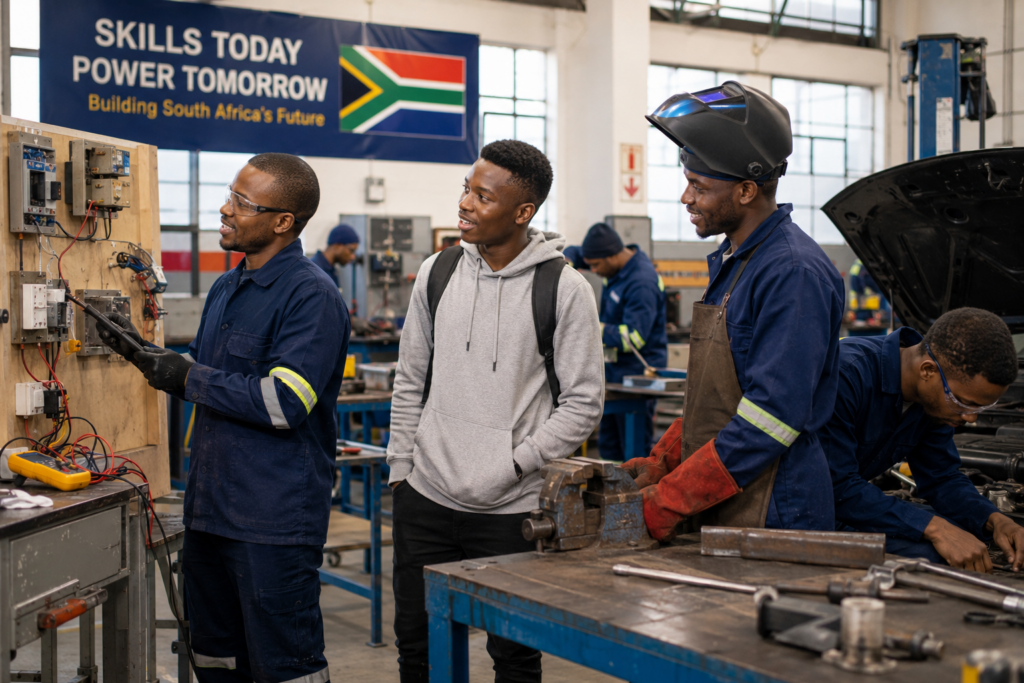
Choosing a career is one of the biggest decisions you will make.
If you enjoy practical work, you already know that sitting behind a desk all day may not be the right fit for you. The next step is choosing a hands-on career that matches your interests, strengths, personality, and long-term goals.
Rather than choosing a trade simply because someone says it pays well, take time to understand what the work actually involves. The highest-paying career is not always the one that will make you happy or keep you motivated for many years.
Think About What You Enjoy Doing
Start by asking yourself what types of activities you naturally enjoy.
For example:
Do you enjoy repairing things?
Do you like building or creating objects?
Are you interested in vehicles and machinery?
Do you enjoy working outdoors?
Are you familiar with using tools?
Do you enjoy solving technical problems?
Do you prefer working with people or equipment?
Your answers can help narrow your options.
Someone who enjoys engines may enjoy becoming a diesel mechanic.
Someone who enjoys construction may enjoy carpentry or bricklaying.
A person who is interested in technology may enjoy becoming an electrician or solar installer.
Someone who enjoys precision and metalwork may enjoy welding or boilermaking.
Consider Your Physical Fitness
Many practical careers require physical activity.
Some involve:
- Standing for long periods
- Working outdoors
- Lifting equipment
- Climbing ladders
- Working at heights
- Working in confined spaces
- Operating machinery
This does not mean you need to be an athlete, but you should be comfortable with physical work if you choose certain trades.
If you prefer lighter physical work, careers such as furniture making, baking, electronics repair, or refrigeration may be more suitable.
Research Job Opportunities
Before choosing a career, research the demand in South Africa.
Ask questions such as:
- Is this occupation growing?
- Which provinces have the most opportunities?
- Which industries hire these workers?
- Is there potential for self-employment?
- Can I specialise later?
Choosing a career with strong long-term demand can improve your employment prospects.
Understand the Training Requirements
Different careers require different types of training.
Some begin through:
- TVET colleges
- Apprenticeships
- Learnerships
- Workplace training
- Professional certifications
- Technical colleges
Research how people normally enter the profession before making your decision.
Understanding the pathway helps you plan your next steps.
Think About Future Growth
Do not only think about your first job.
Think about where the career could take you in ten or twenty years.
Ask yourself:
Can I become a supervisor?
Can I become a specialist?
May I start my own business?
Can I teach others?
Can I work internationally?
Many artisans eventually move into management, consulting, training, or entrepreneurship after gaining experience.
Gain Practical Exposure
If possible, spend time with someone already working in the trade.
You can:
- Visit workshops
- Speak to experienced artisans
- Attend career expos
- Apply for job shadowing
- Volunteer
- Visit TVET colleges
- Watch professionals at work
Seeing the job in real life often provides much better insight than reading about it online.
Do Not Choose Based Only on Salary
Salary is important, but it should not be your only consideration.
A trade that pays well but does not suit your personality may leave you feeling unhappy after a few years.
Instead, try to balance:
- Interest
- Ability
- Job demand
- Income potential
- Lifestyle
- Career growth
When these factors align, you are more likely to enjoy long-term success.
Build Your Skills Continuously
The best artisans never stop learning.
Technology changes constantly.
New equipment is introduced.
Safety regulations evolve.
Industries adopt new systems.
Continue improving your skills by:
- Completing additional training
- Attending workshops
- Learning new technologies
- Reading industry publications
- Practising your trade regularly
- Earning specialised certifications
The more skills you develop, the more valuable you become.
Success Comes Through Experience
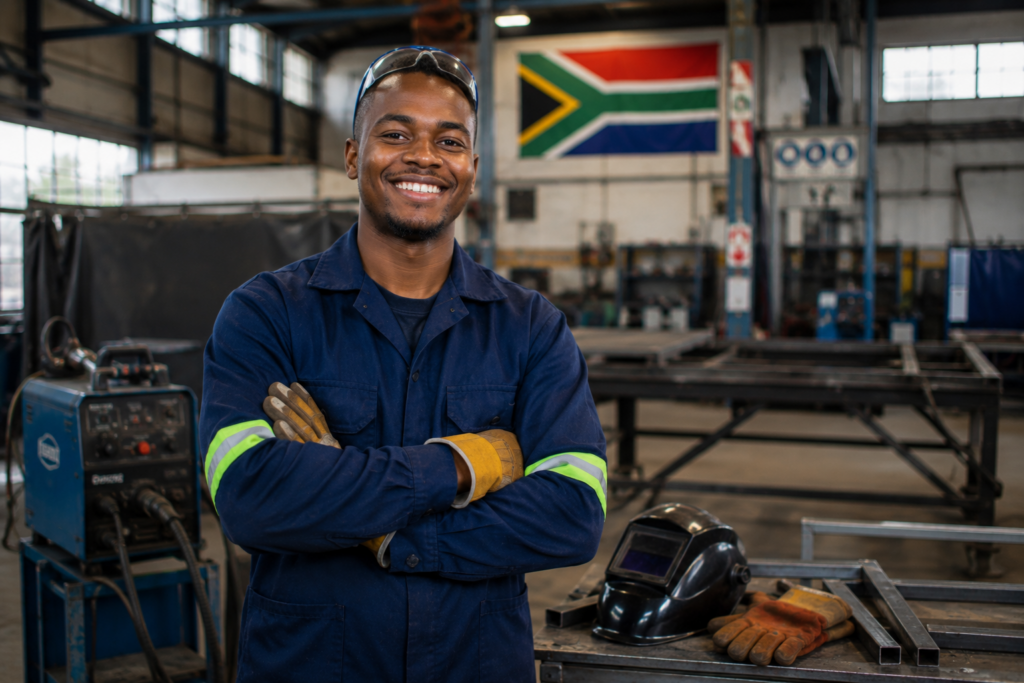
Nobody becomes an expert overnight.
Every qualified artisan started as a beginner.
The first few years are about learning, making mistakes safely, listening to experienced professionals, and improving your confidence.
With patience and consistent effort, your practical skills become your greatest asset.
For many people, working with their hands is not just a job—it becomes a lifelong profession that provides financial stability, personal satisfaction, and opportunities to build something meaningful.
Common Mistakes to Avoid When Choosing a Hands-On Career
Choosing a practical career can lead to a rewarding and stable future, but many people make decisions based on incorrect assumptions or incomplete information.
Avoiding these common mistakes can help you choose a career that suits your abilities, personality, and long-term goals.
Choosing a Career Only Because It Pays Well
It is natural to think about salary, especially when planning your future.
However, money should not be the only reason you choose a career.
For example, becoming an electrician simply because someone told you it pays well may not be the best decision if you dislike working with electrical systems or following detailed safety procedures.
Likewise, becoming a mechanic may not suit you if you have little interest in vehicles or problem-solving.
A better approach is to find a career that combines:
- Your interests
- Your natural abilities
- Good employment opportunities
- Long-term earning potential
People who genuinely enjoy their work are usually more motivated to improve their skills and progress in their careers.
Ignoring Safety Requirements
Many hands-on careers involve working with tools, machinery, electricity, heavy equipment, or hazardous materials.
Safety is never optional.
Every skilled worker should develop good safety habits from the beginning.
This includes:
- Wearing personal protective equipment (PPE)
- Following workplace procedures
- Using tools correctly
- Reporting hazards
- Following health and safety regulations
A strong safety record not only protects you but also makes you more valuable to employers.
Expecting to Become Highly Paid Immediately
Every skilled artisan starts as a beginner.
Your first job may involve learning, assisting experienced workers, and developing practical skills.
As your experience grows, so does your earning potential.
Be patient.
Focus on becoming highly skilled rather than becoming highly paid immediately.
Experienced artisans who consistently produce quality work often enjoy better salaries, promotions, and opportunities to work independently.
Not Continuing to Learn
Technology changes every year.
Today’s workshops use equipment that did not exist a decade ago.
Vehicles contain advanced computer systems.
Factories use automation.
Construction companies use digital measurement tools.
Renewable energy continues expanding.
The most successful tradespeople continue learning throughout their careers.
You can improve by:
- Completing advanced courses
- Learning new technologies
- Obtaining additional trade certifications
- Attending workshops
- Learning from experienced colleagues
Continuous learning helps you remain competitive throughout your career.
Avoiding Apprenticeships
Some people want to qualify quickly without completing practical training.
However, apprenticeships are one of the most valuable parts of becoming an artisan.
They provide:
- Real workplace experience
- Practical problem-solving
- Exposure to experienced mentors
- Industry knowledge
- Confidence
- Professional discipline
Employers often value practical experience just as much as qualifications.
Underestimating Communication Skills
Hands-on careers still require communication.
You may need to:
- Explain repairs to customers
- Work with colleagues
- Read technical instructions
- Complete reports
- Discuss projects with supervisors
- Train apprentices
Being able to communicate clearly can improve both your career progression and customer relationships.
Forgetting About Business Opportunities
Many artisans eventually become business owners.
Learning business skills early can be extremely valuable.
Useful skills include:
- Quoting customers
- Customer service
- Basic bookkeeping
- Marketing
- Time management
- Managing employees
- Purchasing materials
These skills prepare you for self-employment if you decide to start your own company in the future.
Comparing Yourself to Others
Every artisan learns at a different pace.
Some qualify quickly.
Others take longer because they work while studying or complete apprenticeships over several years.
Do not compare your journey to someone else’s.
Focus on building strong practical skills, gaining experience, and improving every year.
Practical Skills Build Lifelong Careers
One of the greatest advantages of learning a trade is that your skills stay with you.
Even if you change employers, move provinces, or eventually start your own business, the knowledge and experience you gain remain valuable.
A qualified artisan can often adapt to new industries more easily because practical skills are transferable.
That is why many hands-on careers continue to provide stable employment and excellent long-term opportunities.
Image Prompt:
A realistic South African apprentice receiving guidance from an experienced artisan inside a modern industrial workshop, both wearing proper PPE while discussing technical drawings and safety procedures, tools neatly organised, natural lighting, professional learning environment, authentic South African setting, Google AdSense friendly, ultra-realistic photography style.
Frequently Asked Questions
Do hands-on careers pay well in South Africa?
Yes. Many skilled trades offer competitive salaries, particularly for experienced artisans working in industries such as mining, manufacturing, renewable energy, engineering, and construction. Earnings can increase further through overtime, specialised skills, and self-employment.
Do I need a university degree to work with my hands?
No. Many practical careers begin through TVET colleges, apprenticeships, learnerships, or workplace training. Some occupations also require trade testing and professional certification instead of a university degree.
Which trade is most in demand?
Demand changes over time, but electricians, plumbers, welders, diesel mechanics, millwrights, refrigeration technicians, boilermakers, and renewable energy technicians are generally among the most sought-after skilled trades in South Africa.
Can I start my own business after learning a trade?
Yes. Many qualified artisans eventually establish businesses offering services such as electrical installations, plumbing, welding, carpentry, mechanical repairs, air conditioning installation, and home renovations.
Are hands-on careers suitable for women?
Absolutely.
Women continue to build successful careers in welding, electrical work, engineering, plumbing, construction management, renewable energy, automotive technology, manufacturing, and many other skilled professions. Employers increasingly value skill, professionalism, and safety rather than gender.
How do I know if a hands-on career is right for me?
If you enjoy solving practical problems, working with tools, staying physically active, creating or repairing things, and seeing the results of your work, a hands-on career could be an excellent choice.
Spend time researching different occupations, visiting workshops, speaking with professionals, and exploring TVET colleges before making your decision.
Image Prompt:
A realistic South African career advisor speaking with a young adult in a vocational training centre, discussing different skilled trades using brochures, tools, and career posters, bright modern training environment, natural lighting, professional and encouraging atmosphere, Google AdSense friendly, ultra-realistic photography style.
Final Takeaway
Hands-on careers are the backbone of South Africa’s economy. From building homes and repairing vehicles to maintaining factories and installing renewable energy systems, skilled professionals play a vital role in keeping industries and communities running.
Choosing a practical career does not mean settling for fewer opportunities. In many cases, it provides excellent job security, competitive salaries, continuous learning, and the chance to become your own boss.
The key is to choose a career that matches your interests, invest in quality training, gain practical experience, and never stop improving your skills.
Whether you dream of becoming an electrician, welder, mechanic, carpenter, plumber, millwright, chef, or solar installer, your success will depend on your willingness to learn, work safely, and take pride in your craft.
A career built with your hands can also build a successful future.
Also read:
How to Choose the Right Career Path in South Africa (For Students and Adults)
How to Get Your First Job With No Experience in South Africa