
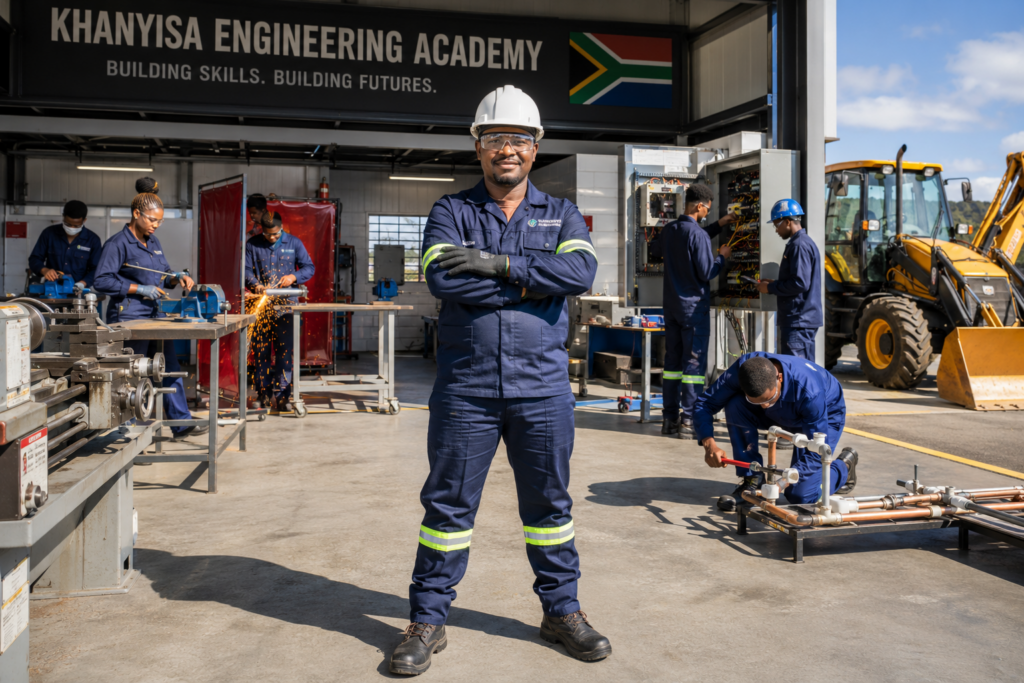
How to Become a Qualified Artisan in South Africa: Complete Career Guide. Skilled artisans are the backbone of South Africa’s economy. From constructing buildings and maintaining power stations to repairing heavy machinery and manufacturing essential products, artisans play a critical role in almost every industry.
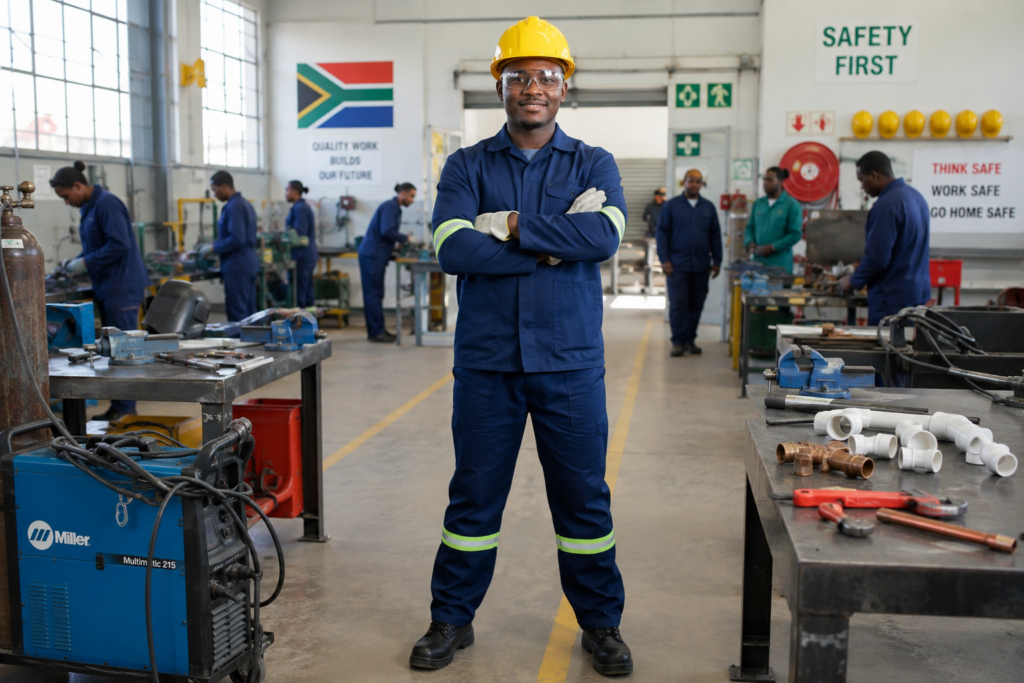
As South Africa continues to face a shortage of qualified artisans, employers in sectors such as mining, construction, manufacturing, engineering, energy, and transport are actively looking for skilled workers. This growing demand has created excellent career opportunities for people who enjoy practical, hands-on work.
Becoming a qualified artisan does not require a university degree. Instead, it involves learning a trade through TVET college studies, apprenticeships, workplace experience, and successfully passing a trade test. Once qualified, artisans can enjoy stable employment, competitive salaries, opportunities to work internationally, and even the chance to start their own businesses.
Whether you’re leaving school, considering a career change, or looking for a profession with strong long-term prospects, becoming an artisan can be one of the smartest career decisions you make.
In this complete guide, you’ll learn exactly what an artisan is, the different trades available in South Africa, the qualifications you need, how apprenticeships work, how to pass your trade test, expected salaries, and how to build a successful career.
What You Will Learn
In this guide, you’ll discover:
- What an artisan is.
- The most in-demand artisan trades in South Africa.
- The qualifications needed to become an artisan.
- How TVET colleges and apprenticeships work.
- What a trade test is and how to prepare for it.
- How long it takes to qualify.
- Salary expectations for different trades.
- Career progression opportunities.
- How to become self-employed after qualifying.
By the end of this guide, you’ll have a clear roadmap for becoming a qualified artisan and building a rewarding career in one of South Africa’s most respected and in-demand professions.
What Is an Artisan?
An artisan is a skilled worker who has received formal training and practical workplace experience in a specific trade. Artisans use specialised tools, technical knowledge, and problem-solving skills to install, repair, maintain, manufacture, or construct important systems and equipment.
Unlike careers that are mainly office-based, artisan work is usually practical and hands-on. Artisans may work in workshops, factories, construction sites, mines, power stations, transport companies, engineering firms, or private businesses.
Examples of qualified artisans include:
- Electricians
- Welders
- Boilermakers
- Plumbers
- Millwrights
- Fitters and Turners
- Diesel Mechanics
- Motor Mechanics
- Carpenters
- Bricklayers
- Refrigeration Technicians
- Instrumentation Technicians
Artisans are different from general labourers because they complete structured training, gain supervised workplace experience, and usually pass a formal trade test before being recognised as qualified.
A qualified artisan is expected to understand technical drawings, workplace safety, machinery, tools, measurements, materials, fault-finding, maintenance procedures, and industry standards.
What Does an Artisan Do?
The exact duties depend on the trade, but most artisans are responsible for tasks such as:
- Reading technical drawings and work instructions
- Measuring and marking materials
- Operating specialised machinery and tools
- Installing equipment or systems
- Repairing damaged components
- Conducting routine maintenance
- Diagnosing mechanical or electrical faults
- Following health and safety procedures
- Testing completed work
- Keeping accurate maintenance records
Artisans must be able to work carefully and accurately because mistakes can cause costly equipment damage, production delays, injuries, or safety risks.
For this reason, employers usually look for artisans who are reliable, safety-conscious, technically skilled, and able to solve problems under pressure.
Why Artisan Careers Are Important in South Africa
Artisans are essential to the functioning of South Africa’s major industries. Without skilled workers, factories cannot operate efficiently, vehicles cannot be maintained, buildings cannot be completed, and electrical or plumbing systems cannot be safely installed.
Artisan skills are especially important in industries such as:
- Mining
- Manufacturing
- Construction
- Automotive
- Transport and logistics
- Energy
- Water and sanitation
- Engineering
- Agriculture
- Telecommunications
South Africa requires skilled workers to maintain existing infrastructure while also building new homes, roads, factories, power systems, and public facilities.
Many employers struggle to find workers with the correct trade qualifications and workplace experience. This means that qualified artisans can often access better opportunities than applicants with only general work experience.
Artisan careers also support entrepreneurship. A qualified electrician, plumber, welder, carpenter, or mechanic may eventually start an independent business and provide services directly to households, companies, and government contractors.
Most In-Demand Artisan Trades in South Africa
There are many artisan careers to choose from. The best trade for you will depend on your interests, physical abilities, technical strengths, and the industries available in your area.
1. Electrician
Electricians install, inspect, maintain, and repair electrical wiring, equipment, control systems, and power distribution systems.
They may work in:
- Residential construction
- Commercial buildings
- Factories
- Mines
- Power stations
- Municipal services
Electricians need strong attention to detail because incorrect electrical work can lead to fires, equipment damage, or serious injuries.
This career suits people who enjoy fault-finding, working with tools, understanding circuits, and solving technical problems.
2. Welder
Welders join metal components using heat, pressure, or specialised welding processes. They work with materials such as steel, stainless steel, aluminium, and other metals.
Common welding methods include:
- Shielded Metal Arc Welding
- Gas Metal Arc Welding
- Gas Tungsten Arc Welding
- Flux-Cored Arc Welding
Welders may work in fabrication workshops, construction, shipbuilding, mining, manufacturing, and maintenance.
Specialised welders who can work with technical drawings, pressure systems, pipelines, or coded procedures may earn higher salaries.
3. Boilermaker
Boilermakers manufacture, assemble, install, and repair large metal structures and equipment.
They often work with:
- Tanks
- Pressure vessels
- Steel structures
- Industrial pipes
- Mining equipment
- Heavy machinery
The work may involve cutting, grinding, bending, shaping, welding, and assembling metal components.
Boilermaking is physically demanding and often requires working at heights, in confined spaces, or around heavy equipment.
4. Millwright
A millwright is trained in both mechanical and electrical systems.
Millwrights install, maintain, repair, and troubleshoot industrial machinery. Because they understand multiple technical areas, they are highly valuable in factories, mines, production plants, and engineering companies.
Their work may include:
- Repairing motors
- Maintaining conveyor systems
- Aligning machinery
- Replacing bearings
- Diagnosing electrical faults
- Conducting preventative maintenance
This career suits people who enjoy complex problem-solving and working with advanced machinery.
5. Fitter and Turner
Fitters and turners manufacture, assemble, repair, and maintain precision mechanical components.
They often use:
- Lathes
- Milling machines
- Grinders
- Measuring instruments
- Hand tools
- Computer-controlled machinery
They must work accurately because even small measurement errors can affect the performance of machines.
Fitters and turners are employed in manufacturing, mining, engineering, transport, and industrial maintenance.
6. Diesel Mechanic
Diesel mechanics repair and maintain diesel-powered vehicles and machinery.
They may work on:
- Trucks
- Buses
- Tractors
- Construction equipment
- Mining machinery
- Generators
Their duties include diagnosing faults, repairing engines, replacing damaged parts, conducting services, and testing equipment.
Diesel mechanics are especially important in transport, logistics, construction, agriculture, and mining.
7. Plumber
Plumbers install and repair water, drainage, sanitation, and piping systems.
They may work in:
- Homes
- Office buildings
- Factories
- Hospitals
- Schools
- Construction sites
Plumbing offers strong self-employment potential because households and businesses regularly require installation, maintenance, and emergency repair services.
8. Motor Mechanic
Motor mechanics inspect, service, diagnose, and repair passenger vehicles and light commercial vehicles.
They work on systems such as:
- Engines
- Brakes
- Suspensions
- Transmissions
- Cooling systems
- Electrical systems
As vehicles become more technologically advanced, mechanics increasingly need computer diagnostic skills in addition to traditional mechanical knowledge.
9. Refrigeration and Air-Conditioning Technician
These technicians install, repair, and maintain cooling and climate-control systems.
They may work with:
- Domestic refrigerators
- Commercial cold rooms
- Industrial refrigeration systems
- Air-conditioning units
- Supermarket cooling equipment
This career offers opportunities in retail, hospitality, food production, manufacturing, and property maintenance.
10. Carpenter
Carpenters build, install, repair, and maintain wooden structures and products.
Their work may include:
- Roof structures
- Doors
- Cabinets
- Furniture
- Ceilings
- Formwork
- Interior fittings
Carpentry is suitable for creative people who enjoy precision work and building physical products.
It also offers strong opportunities for freelancing and business ownership.
Minimum Requirements to Become an Artisan
The exact entry requirements vary depending on the trade, employer, and training provider, but most aspiring artisans follow a similar pathway.
Generally, you should have:
- A Grade 9, Grade 10, Grade 11, or Matric certificate (depending on the programme)
- Good mathematics skills (especially for engineering trades)
- Basic science or technical subjects (recommended)
- Good communication skills
- A willingness to learn practical skills
- Physical fitness for trades that involve manual labour
Some employers may require a Matric certificate with Mathematics and Physical Sciences, while others accept applicants who have completed relevant TVET college programmes.
Don’t be discouraged if you don’t have a university entrance pass. Many successful artisans qualified through TVET colleges, apprenticeships, and workplace training.
Step-by-Step Guide to Becoming a Qualified Artisan
Although different trades have slightly different training routes, most aspiring artisans follow these key steps.
Step 1: Choose Your Trade
Start by deciding which trade best matches your interests and strengths.
Ask yourself:
- Do I enjoy fixing things?
- Do I like working outdoors or indoors?
- Am I interested in electricity, machinery, construction, or vehicles?
- Do I enjoy working with my hands?
- Can I solve practical problems?
Research the daily responsibilities, salary expectations, and employment opportunities before committing to a trade.
Step 2: Study at a TVET College
Many artisans begin their careers by enrolling at a TVET college.
Popular engineering programmes include:
- Electrical Engineering
- Mechanical Engineering
- Civil Engineering
- Engineering Studies (NATED)
- National Certificate (Vocational)
Students usually complete theoretical studies while also developing practical workshop skills.
Subjects may include:
- Engineering Mathematics
- Engineering Science
- Technical Drawing
- Industrial Electronics
- Fitting Principles
- Welding Theory
- Mechanical Technology
These programmes provide the technical foundation needed before entering workplace training.
Step 3: Find an Apprenticeship
An apprenticeship is one of the most important stages of becoming an artisan.
During an apprenticeship, you work under the supervision of experienced artisans while earning practical workplace experience.
Depending on the employer, apprentices may receive a monthly allowance or salary while they train.
Typical apprenticeship activities include:
- Using industry tools safely
- Performing maintenance
- Installing equipment
- Fault finding
- Reading technical drawings
- Learning workplace procedures
- Following safety regulations
Apprenticeships usually last several years, depending on the trade and training programme.
Step 4: Complete Workplace Experience
Practical experience is essential because employers want artisans who can work independently.
During this stage, you’ll gradually take on more responsibility as your skills improve.
You’ll learn how to:
- Diagnose problems
- Repair equipment
- Work efficiently
- Meet production deadlines
- Communicate with supervisors
- Work safely under pressure
Your workplace logbook and completed practical tasks may form part of the requirements before you can attempt your trade test.
Step 5: Pass Your Trade Test
The final step is passing your trade test.
A trade test is a practical assessment that measures whether you have the knowledge and skills required to perform your trade safely and competently.
During the assessment, you may be required to:
- Read engineering drawings
- Measure accurately
- Manufacture components
- Install equipment
- Diagnose faults
- Repair machinery
- Demonstrate safe working practices
- Complete practical tasks within specified time limits
Successfully passing the trade test officially recognises you as a qualified artisan.
How Long Does It Take to Become an Artisan?
The journey to becoming a qualified artisan varies depending on your chosen trade, the training route you follow, and how quickly you complete each stage.
A typical pathway may look like this:
| Stage | Estimated Duration |
|---|---|
| TVET College Studies | 1–3 years |
| Apprenticeship | 2–4 years |
| Workplace Experience | Often completed alongside apprenticeship |
| Trade Test Preparation | Several weeks to several months |
In many cases, it takes approximately 3 to 5 years to become a fully qualified artisan.
While this may seem like a significant commitment, it prepares you for a lifelong career with strong earning potential and opportunities for advancement.
Where Can You Complete an Apprenticeship?
Apprenticeships are offered by a wide range of employers across South Africa.
Common opportunities are available through:
- Mining companies
- Manufacturing plants
- Engineering firms
- Construction companies
- Municipalities
- State-owned enterprises
- Automotive manufacturers
- Power generation companies
- Transport and logistics companies
- Large industrial maintenance contractors
Some TVET colleges also work closely with industry partners to help students gain workplace exposure.
It’s a good idea to regularly check company websites, government vacancy portals, and apprenticeship advertisements for available opportunities.
Salary Expectations for Qualified Artisans
One of the biggest advantages of becoming an artisan is the strong earning potential. Salaries vary depending on your trade, experience, qualifications, location, employer, and industry.
For example, artisans working in mining, oil and gas, heavy engineering, and large manufacturing companies often earn more than those working in smaller businesses.
Below are estimated monthly salary ranges in South Africa.
| Trade | Estimated Monthly Salary |
|---|---|
| Electrician | R22,000 – R45,000+ |
| Welder (Coded/Specialised) | R25,000 – R60,000+ |
| Boilermaker | R30,000 – R65,000+ |
| Millwright | R35,000 – R70,000+ |
| Diesel Mechanic | R25,000 – R60,000+ |
| Fitter & Turner | R28,000 – R60,000+ |
| Plumber | R20,000 – R45,000+ |
| Motor Mechanic | R18,000 – R40,000+ |
| Refrigeration Technician | R25,000 – R50,000+ |
| Carpenter | R18,000 – R40,000+ |
Highly experienced artisans who supervise teams, work overtime, or specialise in high-risk industries may earn significantly more.
Career Growth Opportunities
Qualifying as an artisan is only the beginning of your career. As you gain experience and additional certifications, many opportunities become available.
Possible career progression includes:
Senior Artisan
After several years of experience, you may become responsible for more complex work, mentoring apprentices, and handling major maintenance projects.
Team Leader or Supervisor
Many artisans move into supervisory roles where they coordinate teams, manage projects, allocate work, and ensure safety standards are followed.
Maintenance Planner
Experienced artisans often move into planning roles where they schedule maintenance activities, order spare parts, and minimise equipment downtime.
Workshop Manager
Workshop managers oversee daily operations, staff performance, budgets, customer service, and quality control.
Technical Trainer
Many experienced artisans become instructors at TVET colleges, training centres, or private companies, helping develop the next generation of skilled workers.
Engineering Technician
Some artisans continue studying to become engineering technicians or technologists, combining practical experience with higher qualifications.
Entrepreneur
Many artisans eventually start their own businesses, offering services directly to households, construction companies, municipalities, mines, or industrial clients.
This route can provide excellent income potential and greater independence.
Can You Work Overseas as a South African Artisan?
Yes.
South African artisans are highly respected in many parts of the world because of their practical training and experience.
Qualified artisans have found employment in countries such as:
- Australia
- New Zealand
- Canada
- United Kingdom
- Ireland
- United Arab Emirates
- Saudi Arabia
- Qatar
Demand is particularly strong for trades such as:
- Electricians
- Welders
- Boilermakers
- Pipe Fitters
- Diesel Mechanics
- Millwrights
- Instrument Technicians
Before working abroad, you may need to have your qualifications assessed or complete additional licensing requirements depending on the country’s regulations.
Skills Every Successful Artisan Needs
Technical knowledge alone is not enough. The best artisans combine practical ability with strong workplace skills.
Important skills include:
Problem-Solving
Artisans are expected to identify faults, diagnose issues, and find effective solutions quickly.
Attention to Detail
Accurate measurements, quality workmanship, and following specifications are essential in every trade.
Communication
Artisans regularly communicate with supervisors, engineers, customers, and colleagues.
Being able to explain technical issues clearly is a valuable skill.
Teamwork
Many projects involve working alongside electricians, engineers, welders, mechanics, plumbers, and construction workers.
Good teamwork improves productivity and workplace safety.
Safety Awareness
Following health and safety procedures protects both workers and equipment.
Employers value artisans who consistently work safely and responsibly.
Continuous Learning
Technology continues to evolve.
Successful artisans regularly update their skills by learning new techniques, using modern equipment, and completing additional industry certifications.
Tips for Finding Your First Artisan Job
Getting your first job may feel challenging, but these strategies can improve your chances of success.
- Build a professional CV highlighting your training and practical experience.
- Include your apprenticeship and workplace learning.
- Obtain references from supervisors or mentors.
- Apply to multiple employers rather than waiting for one opportunity.
- Register on reputable South African job portals.
- Attend career fairs and employer recruitment events.
- Continue improving your practical skills while searching for work.
- Maintain a positive attitude and be willing to start in entry-level positions.
Remember that many employers value reliability, work ethic, and willingness to learn just as much as technical ability.
Final Thoughts
Becoming a qualified artisan is one of the most rewarding career paths available in South Africa. It offers practical work, stable employment opportunities, competitive salaries, and the satisfaction of building, repairing, and maintaining the systems that keep industries running.
Whether you dream of becoming an electrician, welder, boilermaker, plumber, diesel mechanic, or millwright, the journey starts with quality training, workplace experience, and a commitment to continuous learning.
South Africa’s growing demand for skilled artisans means there has never been a better time to enter a trade. With dedication, hard work, and the right qualifications, you can build a successful career, progress into leadership roles, or even establish your own thriving business.
Frequently Asked Questions (FAQs)
Do I need a university degree to become an artisan?
No. Most artisans qualify through TVET college studies, apprenticeships, workplace training, and passing a recognised trade test.
How long does it take to become a qualified artisan?
It usually takes between 3 and 5 years, depending on the trade, training programme, and apprenticeship requirements.
Which artisan trade pays the highest?
Trades such as millwright, boilermaker, specialised welder, electrician, and diesel mechanic often offer some of the highest salaries, particularly in mining and heavy industry.
Can I become an artisan without Matric?
Some programmes accept learners with Grade 9 or higher, while others require Matric or specific subjects. Requirements vary depending on the training provider and employer.
Are artisans in demand in South Africa?
Yes. Skilled artisans remain in high demand across industries including mining, construction, manufacturing, engineering, transport, and energy.
Also read: Best Careers for People Who Like Working With Their Hands